By Ava
We love baking bread, but some days we want that fresh, warm, pull off the pan magic without turning on the oven, and this Turkish flatbread delivers exactly that. It cooks in a skillet on the stovetop in minutes, which is what real food for real life is all about, simple, comforting, and made to share.
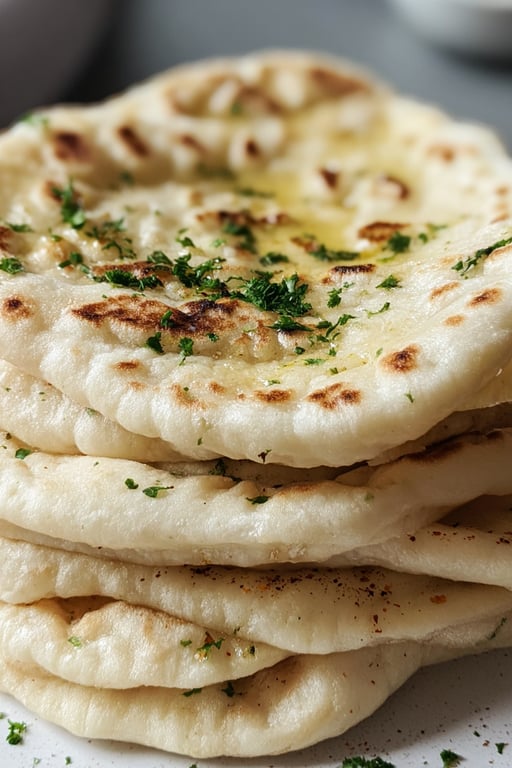
Also known as bazlama, this Turkish flatbread is soft and pillowy on the inside with golden, lightly blistered spots on the outside. The dough comes together with everyday pantry staples, rests until puffy, and then cooks one round at a time in a hot pan. Brushed with a little butter and a scatter of parsley, it is the kind of warm bread you tear into the moment it is ready.

Soft, pillowy, and cooked entirely on the stovetop, this Turkish flatbread is golden outside and tender inside, perfect for dipping and wrapping.
Why You Will Love This Turkish Flatbread
- No oven required. This Turkish flatbread cooks in a skillet on the stovetop, so you can have fresh bread even on a warm day.
- The texture is wonderful. You get a soft, pillowy inside with golden, slightly chewy spots on the outside.
- It uses simple staples. Flour, milk, water, yeast, and a little butter are most of what you need.
- It is so versatile. Serve it with dips, tuck fillings inside, or set it alongside soups and stews.
- It comes together easily. The dough is forgiving, and each round cooks in just a couple of minutes.
What Makes This Turkish Flatbread So Good
Bazlama is a traditional village bread from Turkey, where it is often cooked over an open flame or on a hot griddle. Cooking it in a skillet at home gives you that same charm, with golden blistered spots forming as the dough hits the hot pan. If you enjoy the history, you can read more about bazlama and its place in Turkish kitchens.
What sets this Turkish flatbread apart from something like pita is its soft, thick, pillowy crumb. It does not puff into a pocket. Instead it stays tender and a little chewy, which makes it perfect for scooping up dips or folding around a filling. Warm milk in the dough adds richness, while the yeast gives it a gentle lift and a faintly tangy flavor.
The finishing touch is a brush of melted butter or olive oil as soon as the bread comes off the pan, with fresh parsley if you like. That last step keeps the surface soft and adds a savory, fragrant note. It is a small detail that makes this Turkish flatbread taste like it came from a bakery.

Optional Pro Tip: Use Warm, Not Hot, Liquid
Yeast loves warmth, but too much heat will hold it back. The milk and water should feel comfortably warm to the touch, like a cozy bath, not hot. If the liquid is too hot it can weaken the yeast and keep the dough from rising into that signature soft, airy crumb.
Give the dough enough time to rest and puff before you shape it. A proper rise is what gives this Turkish flatbread its pillowy texture, so let it relax until it looks noticeably puffy before you divide and cook it.
Tips for the Best Turkish Flatbread
- Preheat the pan well. A cast iron or nonstick skillet over medium heat gives the best golden spots and even cooking.
- Keep the rounds even. Roll each piece to a similar thickness so they cook at the same rate.
- Choose your thickness. Thinner rounds cook faster and crisp more, while thicker ones stay extra pillowy.
- Flour your surface. If the dough feels sticky, dust the counter with flour or lightly dampen your hands.
- Watch for bubbles. When the top puffs and bubbles appear, it is time to flip and finish the second side.
- Do not rush the heat. Medium heat browns the outside while the inside cooks through, so avoid going too high.
- Brush while warm. A swipe of butter or olive oil right off the pan keeps the bread soft and adds flavor.
- Keep them cozy. Stack the finished rounds under a clean towel so they stay warm and tender.

Variations and Add Ins
This recipe is easy to adapt to whatever you are in the mood for. Here are a few simple ways to make this Turkish flatbread your own.
- Garlic butter. Stir minced garlic into the melted butter for a garlic bread style finish.
- Herb forward. Add chopped parsley, dill, or oregano to the dough for a fragrant, herby loaf.
- Whole wheat. Swap part of the flour for whole wheat, adding a little extra liquid as needed.
- Dairy free. Use a plant based milk and olive oil in place of the milk and butter.
- Sesame top. Press sesame or nigella seeds onto the rounds before cooking for extra flavor.
- Cheesy version. Tuck a little shredded cheese inside a folded round and warm until melty.
- Extra soft. Add a spoonful of plain yogurt to the dough for a richer, tangier crumb.
- Wrap size. Roll the rounds thinner and wider to use them as soft wraps.
How to Store and Reheat
This Turkish flatbread is best warm and fresh, but it keeps nicely too. Once cooled, store the rounds in an airtight bag or container at room temperature for a day or two, or in the refrigerator for a little longer. Keeping them wrapped helps them stay soft.
To reheat, warm the bread for a few seconds in a dry skillet or wrap it in a towel and warm it briefly until soft again. You can also freeze the cooled rounds in a sealed bag, then thaw and warm them when you want fresh bread in a hurry.

Serving Suggestions for Turkish Flatbread
Part of the joy of this Turkish flatbread is how many ways you can enjoy it. Warm from the pan, it is wonderful simply torn and dipped into good olive oil or a creamy spread.
It also shines as part of a bigger spread. Pile a platter with dips, fresh vegetables, and warm bread, and let everyone build their own plate. It is just as happy alongside a cozy bowl of soup or wrapped around a savory filling.
- With dips. Serve it with hummus, baba ganoush, or a yogurt dip.
- As a wrap. Fold it around grilled vegetables, chicken, or other fillings.
- With soup. Use it to scoop up a hearty stew or a warm bowl of soup.
- On a mezze board. Add it to a spread of olives, cheese, and fresh vegetables.
Frequently Asked Questions
What is bazlama?
Bazlama is a traditional Turkish flatbread that is soft, thick, and pillowy. It is cooked on a hot surface rather than baked, which gives it golden, lightly blistered spots.
Do I really not need an oven?
That is right. This Turkish flatbread is cooked entirely in a skillet on the stovetop, which makes it quick and keeps the kitchen cool.
What pan works best?
A cast iron skillet holds heat well and gives lovely golden spots, but a nonstick pan works too. Medium heat is the sweet spot.
Why did my bread come out dense?
The dough may not have risen enough, or the liquid was too hot for the yeast. Use warm, not hot, liquid and let the dough rest until puffy.
Can I make it dairy free?
Yes. Use a plant based milk in place of the milk and brush the bread with olive oil instead of butter.
How thick should I roll it?
Around a quarter inch is a good middle ground. Thinner rounds cook faster and crisp more, while thicker rounds stay extra soft.
Can I use whole wheat flour?
You can swap in some whole wheat flour for a heartier loaf. It absorbs more liquid, so add a splash more as needed.
How do I keep the rounds soft?
Brush them with butter or oil while warm and stack them under a clean towel so the steam keeps them tender.
Can I freeze it?
Yes. Freeze the cooled rounds in a sealed bag, then thaw and warm them in a skillet or towel when you are ready.
How many does this Turkish flatbread make?
It makes several rounds, plenty for sharing, and you can easily scale the dough up or down for your group.
Fresh Bread, No Oven Needed
There is something deeply comforting about warm, homemade bread, and this Turkish flatbread brings that feeling to the table without the wait or the oven. It is soft, golden, endlessly useful, and quickly becomes a recipe you reach for again and again.
If you enjoy soft, pull apart breads, try pairing it with another favorite like our lentil spinach flatbread for a cozy bread basket. However you serve it, we hope this bread brings a little warmth to your table.
Results vary by ingredients, equipment, and cooking conditions. Always taste and adjust as you go.
Turkish Flatbread
Ingredients
Equipment
Method
- Pour warm milk, warm water, sugar, and yeast into a container. Mix well.
- Add flour and salt and mix well. Knead the dough until smooth and no longer sticky.
- Cover the dough and let it rise until doubled in size.
- Divide the dough into 6 pieces and shape into rounds. Cover with plastic wrap.
- Roll each piece into a 7-inch round about 1/4 inch thick.
- Heat a thick pan over medium heat.
- Cook on both sides until bubbles form, then flip.
- When the bread puffs like a balloon, reduce the heat to low.
- Keep cooked bread covered with a cloth to prevent drying.
- Use a thick pan for the best rise.
- Brush with melted butter or olive oil and serve.
Nutrition
Tried this recipe?
Let us know how it was!Enjoyed the recipe? Share it!

Kitchen Essentials We Recommend
Tools that make cooking easier — tried, tested, and loved.


As an Amazon Associate we earn from qualifying purchases.
Got a recipe the world should try?
Share your favorite family recipe or national dish with food lovers in 100+ countries.
Submit Your Recipe