By Lily
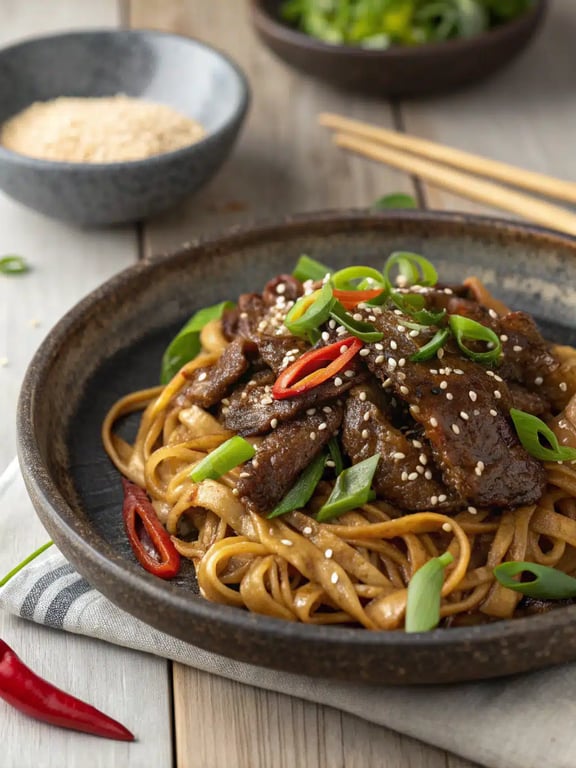
Mongolian beef noodles has earned a permanent spot in our weeknight rotation, and people ask about it before they even sit down. This is the kind of cooking we believe in, nothing fussy, just a plate worth sitting down for.
A quick and flavorful dish featuring savory ground beef, tender noodles, and a rich, slightly sweet Mongolian style sauce. Perfect for an easy weeknight dinner. These mongolian beef noodles comes together in about 30 minutes from start to finish, which is exactly why it keeps showing up on our table. Below you will find the full ingredient list, the exact method we use, and the small details that make these mongolian beef noodles work every single time.

A quick and flavorful dish featuring savory ground beef, tender noodles, and a rich, slightly sweet Mongolian style sauce. Perfect for an easy weeknight dinner.
Prep: 10 minutes | Cook: 20 minutes | Total: 30 minutes | Serves: 4 | Calories: 450 per serving | Protein: 25 g
- Why You Will Love Mongolian Beef Noodles
- Ingredients You Will Need
- How to Make Mongolian Beef Noodles
- Tips for the Best Results
- Variations and Add Ins
- Storing and Reheating
- What to Serve Alongside
- Frequently Asked Questions
Why You Will Love Mongolian Beef Noodles
There are plenty of weeknight dinners out there. Here is why these mongolian beef noodles keeps winning in our kitchen.
- It actually fills you up. Provides a satisfying meal with protein and carbohydrates.
- The flavor does the work. Rich in flavor from the garlic and ginger.
- It just works. Quick to prepare, making it great for busy nights.
- Dinner in about 30 minutes. Start to plate, including the prep.
- About 25 g of protein per serving. Enough to hold you until morning, not just until nine.
Ingredients You Will Need for Mongolian Beef Noodles
Everything here is an everyday ingredient. This is the exact list we use for these mongolian beef noodles, measured the way we actually cook it.
Protein
- 1 lb ground beef
- 1/2 cup beef broth
Base
- 8 oz noodles, spaghetti, udon, or rice noodles
Produce
- 3 cloves garlic, minced
- 1 tbsp cornstarch, mixed with 2 tbsp water
- 1/2 cup green onions, chopped
Seasoning
- 1/2 tsp red pepper flakes, optional
Pantry
- 2 tbsp vegetable oil
- 1 inch ginger, minced
- 1/4 cup soy sauce
- 1/4 cup brown sugar
- 1 tbsp hoisin sauce
- 1 tbsp sesame seeds, for garnish
A quick word on the parts that matter most in these mongolian beef noodles:
- Noodles, spaghetti, udon, or rice noodles. Cook it a minute short of the package time, since it keeps cooking once it hits the hot sauce.
- Ground beef. Give it a proper sear first. That browning is where most of the flavor comes from.
- Garlic. Let it soften slowly rather than rushing it. Burnt garlic turns bitter and there is no fixing it.
Prefer metric? The recipe card below switches every amount over for you.

A quick and flavorful dish featuring savory ground beef, tender noodles, and a rich, slightly sweet Mongolian style sauce. Perfect for an easy weeknight dinner.
How to Make Mongolian Beef Noodles
Here is exactly how we make this recipe: about 10 minutes of prep and roughly 20 minutes of cooking.
What you need: Large Skillet, Mixing Bowl, Colander.
- Boil the noodles according to package instructions. Drain and set aside.
- Heat vegetable oil in a large skillet over medium-high heat. Add the ground beef and cook until browned, breaking it apart as it cooks. Drain excess fat.
- Add the minced garlic and ginger to the skillet and cook for about 1 minute until fragrant.
- In a mixing bowl, whisk together soy sauce, brown sugar, beef broth, hoisin sauce, and red pepper flakes. Pour into the skillet and stir well.
- Stir in the cornstarch slurry and simmer until the sauce thickens.
- Add the cooked noodles and toss until evenly coated with the sauce.
- Garnish with chopped green onions and sesame seeds before serving.
That is the whole method. Nothing here needs special technique, just a little attention at the right moments.
Tips for the Best Mongolian Beef Noodles
None of this is complicated, but these are the small habits that separate a good plate of this dish from a great one.
- Get the pan properly hot before anything goes in. That first sear is where the flavor starts.
- Do not move the food too soon. Let it sit long enough to release on its own.
- Scrape up the browned bits when you add liquid. That is pure flavor sitting on the bottom.
- Read the steps once before you start. Knowing what is coming makes the whole thing calmer.
- Have everything measured and within reach before the heat goes on. Have everything measured and within reach before the heat goes on.
Taste as you go and adjust the seasoning at the end rather than the beginning. The recipe rewards a little attention right at the finish.

A quick and flavorful dish featuring savory ground beef, tender noodles, and a rich, slightly sweet Mongolian style sauce. Perfect for an easy weeknight dinner.
Variations and Add Ins
Mongolian beef noodles takes changes well, so treat the recipe above as a starting point rather than a set of rules. These are the swaps we come back to most often.
- Change the cut. Ground beef, chuck or sirloin each work, they just need different cooking times.
- Make it richer. A spoonful of tomato paste or a splash of broth deepens the sauce.
- Add heat. Red pepper flakes or a little cayenne give it a gentle warmth.
- Bulk it up. Beans, mushrooms or extra vegetables stretch it without changing the character.
- Change the herbs. Fresh parsley, basil or dill at the end each send it somewhere slightly different for no extra effort.
- Make it a bigger meal. Serve it over rice or with warm bread and it stretches to feed another person or two.
Change one thing at a time rather than three. That way you find out what you actually like in this one instead of guessing at the end.
How to Store and Reheat Mongolian Beef Noodles
Leftovers keep well in an airtight container in the refrigerator for up to four days, and the flavor often deepens overnight. Reheat gently on the stove with a splash of broth. It also freezes well for up to three months.
If you are cooking ahead on purpose, prep the components and keep them separate until you are ready. It takes a few minutes off a busy evening and it holds its texture far better that way.

A quick and flavorful dish featuring savory ground beef, tender noodles, and a rich, slightly sweet Mongolian style sauce. Perfect for an easy weeknight dinner.
What to Serve With Mongolian Beef Noodles
The dish carries a plate on its own, but a few simple things turn it into a proper dinner.
- Mashed potatoes. Simple, and it soaks up everything on the plate.
- A crusty piece of bread. A little contrast keeps the whole plate from feeling heavy.
- Buttered noodles. Easy to put together while the main event finishes.
- A sharp green salad. The kind of small addition that makes dinner feel finished.
Mongolian Beef Noodles FAQ
Can I make Mongolian Beef Noodles ahead of time?
Yes. You can prep the components a day ahead and keep them covered in the refrigerator, then finish this recipe when you are ready to eat. It saves real time on a busy evening.
Can I use something other than noodles, spaghetti, udon, or rice noodles?
You can. Use what you have and keep the quantity about the same. The cooking time may shift slightly, so go by how this dish looks rather than the clock.
How long does Mongolian Beef Noodles take?
About 30 minutes from start to finish, including roughly 10 minutes of hands on prep. The first time through may run a little longer.
Can I double the recipe?
Yes. Doubling works well here. Use a larger pan so nothing crowds, and expect the recipe to need a little more time in the heat.
How do I store leftovers?
Leftovers keep well in an airtight container in the refrigerator for up to four days, and the flavor often deepens overnight.
Can I freeze Mongolian Beef Noodles?
Yes, in an airtight container for up to three months. Thaw overnight in the refrigerator and reheat gently so the texture holds.
A Dinner Worth Repeating
If you make mongolian beef noodles, we hope it turns into one of those recipes you stop measuring after a while, the one you can put together on a Tuesday without thinking too hard about it. That is the best thing a recipe can become, not a special occasion dish but a reliable one.
If something worked especially well for you, or you found a swap worth passing on, we would genuinely like to hear about it. Most of the small improvements in our recipes started as somebody else’s idea.
Simple ingredients, an honest method, and a plate worth sitting down for. That is all we are ever after.
Easy Mongolian Ground Beef Noodles
Ingredients
Equipment
Method
- Boil the noodles according to package instructions. Drain and set aside.
- Heat vegetable oil in a large skillet over medium-high heat. Add the ground beef and cook until browned, breaking it apart as it cooks. Drain excess fat.
- Add the minced garlic and ginger to the skillet and cook for about 1 minute until fragrant.
- In a mixing bowl, whisk together soy sauce, brown sugar, beef broth, hoisin sauce, and red pepper flakes. Pour into the skillet and stir well.
- Stir in the cornstarch slurry and simmer until the sauce thickens.
- Add the cooked noodles and toss until evenly coated with the sauce.
- Garnish with chopped green onions and sesame seeds before serving.
Nutrition
Tried this recipe?
Let us know how it was!Enjoyed the recipe? Share it!
Kitchen Essentials We Recommend
Tools that make cooking easier — tried, tested, and loved.


As an Amazon Associate we earn from qualifying purchases.
Got a recipe the world should try?
Share your favorite family recipe or national dish with food lovers in 100+ countries.
Submit Your Recipe