By Ava
We make this French beef stew whenever we want a rich, comforting meal that fills the whole house with a wonderful aroma. Tender chunks of beef slowly braise with carrots, onions, and herbs in a deeply savory broth, finished with golden mushrooms and sweet pearl onions. That is real food for real life, hearty, soul-warming, and full of deep, savory flavor in every bite. It is the kind of special dish that truly feels like a celebration, yet uses simple, everyday ingredients.
What makes this French beef stew so good is the slow, patient braise. Time in a low oven transforms a humble cut of beef into something meltingly tender, while the vegetables and herbs build a deep, glossy sauce that coats every bite. It is the kind of cozy, impressive dish that is perfect for Sunday dinners and special gatherings. Best of all, most of the time is hands-off, as the oven does the slow, gentle work of making the beef tender.

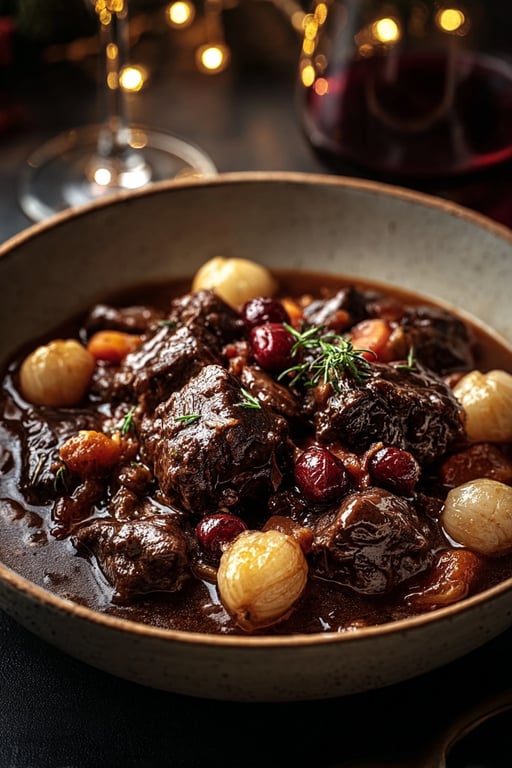
Tender braised beef with mushrooms and pearl onions in a savory sauce, this French beef stew is rich and comforting.
Why You Will Love This French Beef Stew
- It is meltingly tender. Slow braising makes the beef in this French beef stew fall-apart tender.
- It is rich and savory. A deep, glossy sauce coats every bite.
- It is comforting. It is the ultimate cozy meal for cool evenings.
- It is impressive. It looks and tastes restaurant-worthy, yet it is simple to make.
- It is make-ahead friendly. The flavors deepen and get even better the next day.
What Makes This French Beef Stew So Good
It starts with the beef. Chuck is the perfect cut for this French beef stew, because its rich marbling and connective tissue break down during the long, gentle braise into tender, melt-in-your-mouth beef. Browning the beef well first builds a deep, savory foundation for the whole dish. Cutting it into even, generous chunks helps every piece stay juicy and cook at the same rate.
Then comes the braise. This dish is a take on the classic French beef stew, where the beef simmers slowly with aromatics, herbs, and a savory broth until everything is rich and tender. Turkey bacon, tomato paste, and a little flour give the sauce wonderful depth and body.
Finally, the mushrooms and pearl onions make it special. Sauteed separately until golden, then stirred in near the end, they add a sweet, earthy finish and that classic French bistro touch. They are what give this French beef stew its signature, comforting character.

Optional Pro Tip: Brown the Beef Well
The secret to the deepest flavor in this French beef stew is taking the time to brown the beef well. Pat the beef dry first, since moisture keeps it from browning, and sear it in batches so the pieces have room. Crowding the pan steams the beef instead of giving it that rich, golden crust.
It also helps to saute the mushrooms and pearl onions separately, rather than adding them at the start. Cooking them on their own keeps them from overcooking and turning soft, so they hold their shape and add the perfect finishing texture to the stew. Stirring them in during the last stretch of cooking lets them warm through while staying golden and flavorful.
Tips for the Best French Beef Stew
- Use chuck. Beef chuck becomes wonderfully tender during the slow braise.
- Pat the beef dry. Dry beef browns better and develops a rich crust.
- Brown in batches. Give the beef room so it sears instead of steaming.
- Do not skip the searing. Browning is where the deep flavor comes from.
- Toast the tomato paste. Cooking it briefly deepens its savory flavor.
- Saute the garnish separately. Cook mushrooms and pearl onions on their own.
- Add them late. Stir in the mushrooms and onions near the end.
- Be patient. A low, slow braise is the key to tender beef.

Variations and Add Ins
This stew is easy to adapt. Here are a few simple ways to make this French beef stew your own.
- Add celery. A stalk or two of celery deepens the savory base.
- Add potatoes. Hearty potatoes make it even more filling.
- Add more herbs. Fresh rosemary or extra thyme adds lovely depth.
- Use different mushrooms. Cremini or button mushrooms both work well.
- Make it thicker. Simmer it uncovered to reduce and thicken the sauce.
- Add a touch of sweetness. A pinch of sugar balances the savory flavors.
- Add root vegetables. Parsnips or turnips are cozy additions.
- Garnish with parsley. A generous sprinkle of fresh parsley brightens the dish.
How to Store and Reheat
This French beef stew is wonderful for making ahead, and it tastes even better the next day. Store cooled leftovers in an airtight container in the refrigerator for up to three days, as the flavors continue to deepen and intensify over time.
To reheat, warm it gently on the stovetop over low heat or in the oven until heated through, adding a splash of broth if needed to loosen the sauce. It also freezes beautifully, so you can make a big batch and save portions for a cozy meal later.

Serving Suggestions for French Beef Stew
This French beef stew is wonderful served over something to soak up all that rich, savory sauce. Spoon it over creamy mashed potatoes, buttery egg noodles, or fluffy rice, or serve it with warm crusty bread to catch every last drop.
It also pairs beautifully with a simple, fresh side. A crisp green salad or some steamed green vegetables keep the meal balanced and round out the hearty, comforting stew perfectly. A glass of sparkling water with lemon makes a refreshing match for the rich, savory flavors.
- With mashed potatoes. Creamy mashed potatoes soak up the sauce.
- With noodles. Buttery egg noodles make a classic pairing.
- With bread. Warm crusty bread is perfect for the sauce.
- With a salad. A crisp green salad keeps the meal balanced.
Frequently Asked Questions
What cut of beef is best?
Beef chuck is ideal. Its marbling and connective tissue break down during the long braise into tender, flavorful beef.
Why brown the beef first?
Browning builds deep, savory flavor. It is the most important step for a rich, flavorful French beef stew.
Why cook the mushrooms separately?
Cooking them on their own keeps them from overcooking, so they hold their shape and add the perfect finishing texture.
Can I make it ahead?
Yes. This stew is even better the next day, as the flavors deepen overnight, making it a great make-ahead meal.
How do I peel pearl onions easily?
Pour hot water over them and let them sit for a few minutes. The skins will then slip off easily.
What should I serve with it?
Mashed potatoes, egg noodles, rice, or crusty bread all soak up the savory sauce of this French beef stew beautifully.
Can I make it thicker?
Yes. Simmer the stew uncovered for a bit to reduce and thicken the sauce until it coats the back of a spoon.
Can I add potatoes?
Absolutely. Hearty potatoes are a lovely addition that make this French beef stew even more filling.
Is it freezer friendly?
Yes. It freezes beautifully. Cool it completely, then freeze in portions and thaw before reheating gently.
How long does it take?
It takes a few hours, mostly hands-off as it braises slowly. That patient cooking is what makes the beef so tender.
A Rich, Hearty Favorite
Rich, hearty, and full of deep, savory flavor, this French beef stew is the kind of meal that brings everyone to the table. It is comforting, impressive, and surprisingly simple, perfect for Sunday dinners, cool evenings, and special gatherings alike. With its tender beef and glossy sauce, every bowl feels like a warm, cozy hug.
If you love a cozy, comforting bowl, try another hearty favorite like our Mediterranean chickpea soup next. However you serve it, we hope this French beef stew brings a little warmth and comfort to your table.
Results vary by ingredients, equipment, and cooking conditions. Always taste and adjust as you go.
French Beef Stew
Ingredients
Equipment
Method
- Preheat oven to 350 F.
- In a large Dutch oven over medium heat, cook the diced turkey bacon until crispy. Remove and set aside, leaving the rendered fat in the pot.
- Season the beef with salt and pepper. Brown the beef in batches in the turkey bacon fat until well-seared. Remove and set aside.
- Add the chopped onion and carrots to the pot and saute until softened, about 5 minutes. Stir in garlic and tomato paste and cook for 1 minute.
- Sprinkle the flour over the vegetables and cook for 1 to 2 minutes, stirring constantly.
- Gradually stir in chicken broth, scraping the bottom to deglaze the pot. Add bay leaf, thyme, browned beef, and turkey bacon. Bring to a simmer.
- Cover and transfer the pot to the oven. Cook for 2.5 hours, stirring halfway through.
- In a skillet, heat butter and olive oil over medium heat. Saute the mushrooms and pearl onions until golden brown, about 8 minutes.
- Add the sauteed mushrooms and pearl onions to the stew during the last 30 minutes of cooking.
- Adjust seasoning with salt and pepper. Remove the thyme sprigs and bay leaf before serving.
Nutrition
Tried this recipe?
Let us know how it was!Enjoyed the recipe? Share it!

Kitchen Essentials We Recommend
Tools that make cooking easier — tried, tested, and loved.


As an Amazon Associate we earn from qualifying purchases.
Got a recipe the world should try?
Share your favorite family recipe or national dish with food lovers in 100+ countries.
Submit Your Recipe