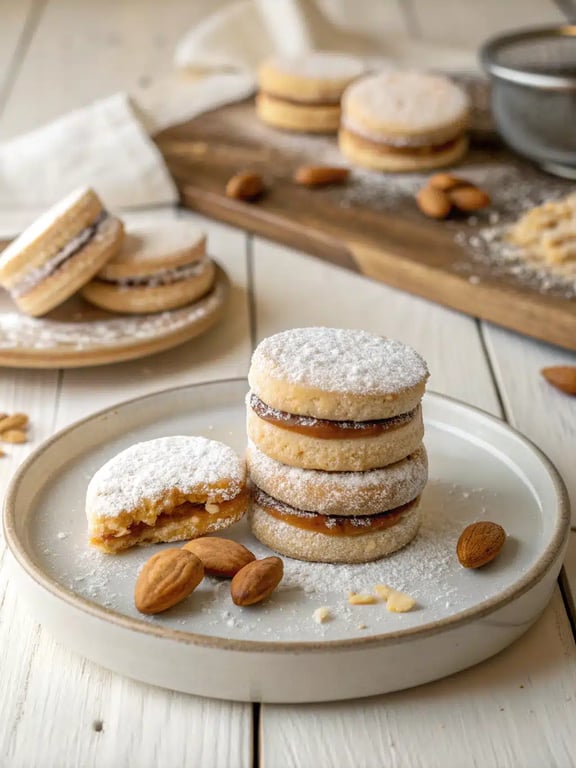
Delicate, melt-in-your-mouth shortbread cookies filled with rich dulce de leche and dusted with powdered sugar. This classic Spanish treat features a tender, crumbly texture and a perfect balance of sweet flavors.
What Makes This Andalusian Alfajores Recipe So Special
With just a handful of simple ingredients, this Andalusian Alfajores recipe delivers a sublime treat that’s all about contrast. Imagine two delicate, melt-in-your-mouth cookies hugging a generous layer of rich, creamy dulce de leche, all finished with a snowy dusting of powdered sugar. The result is a perfect balance of tender crumb and luscious filling that feels both elegant and utterly irresistible. During our testing, we found that the secret to truly authentic Spanish Alfajores lies in the texture of the cookie itself. It shouldn’t be crisp, but rather tender and shortbread-like, almost dissolving on the tongue. Achieving this comes down to two things: the cornstarch in the dough and a very light hand when mixing. Trust us, once you master this easy Alfajores method, you’ll have a show-stopping dessert ready for any occasion.
This post may contain affiliate recommendations. Please see our disclosure policy.
What You’ll Find in This Article
Ingredients for Your Andalusian Alfajores Recipe
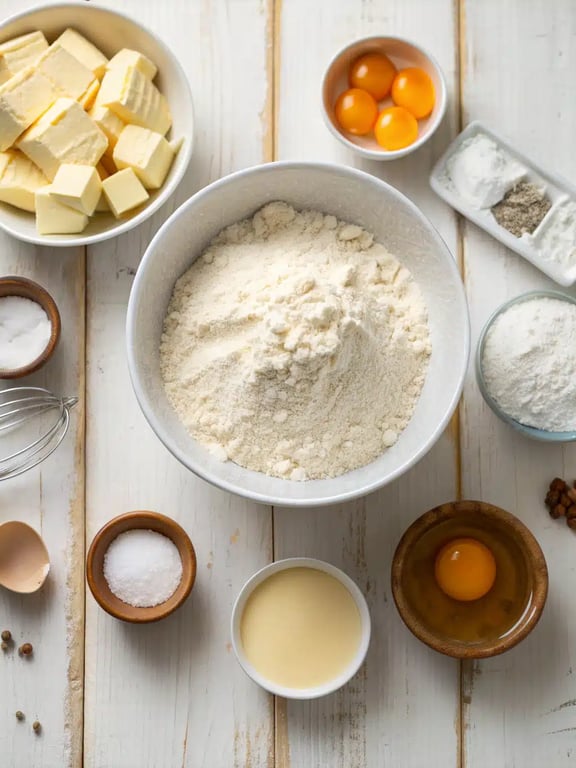
Gathering your ingredients is the first step to creating these wonderful homemade Alfajores. Fortunately, you likely have most of these pantry staples on hand already. Here’s everything you’ll need for this classic Andalusian Alfajores recipe:- 1 cup unsalted butter, at room temperature
- 3/4 cup granulated sugar
- 2 large egg yolks
- 1 teaspoon vanilla extract
- 2 1/2 cups all-purpose flour
- 1/2 cup cornstarch
- 1 teaspoon baking powder
- 1/4 teaspoon salt
- 1 (13.4 ounce) can dulce de leche
- 1/2 cup powdered sugar, for dusting
Cook Time for Easy Alfajores
We know your time is precious, so we’ve broken down the timeline for these Spanish Alfajores. While the hands-on work is quite quick, a little patience for chilling and cooling makes all the difference in the final texture. Here’s what you can expect:- Prep Time: 20 minutes (plus 1 hour chilling)
- Cook Time: 10-12 minutes per batch
- Total Time: About 1 hour 45 minutes (including cooling and assembly)
How to Make Homemade Alfajores
Follow these simple steps to create your own batch of delicate, delicious alfajores cookies. We’ve included our team’s tested tips along the way to ensure your success.Step 1: Cream the Butter and Sugar
In a large bowl, use an electric mixer to cream the softened butter and granulated sugar together on medium speed until light and fluffy, about 3 minutes. Beat in the egg yolks and vanilla extract until fully combined.Step 2: Combine Dry Ingredients
In a separate bowl, whisk together the flour, cornstarch, baking powder, and salt. Gradually add the dry ingredients to the butter mixture, mixing on low speed just until a soft, cohesive dough forms. Avoid overmixing.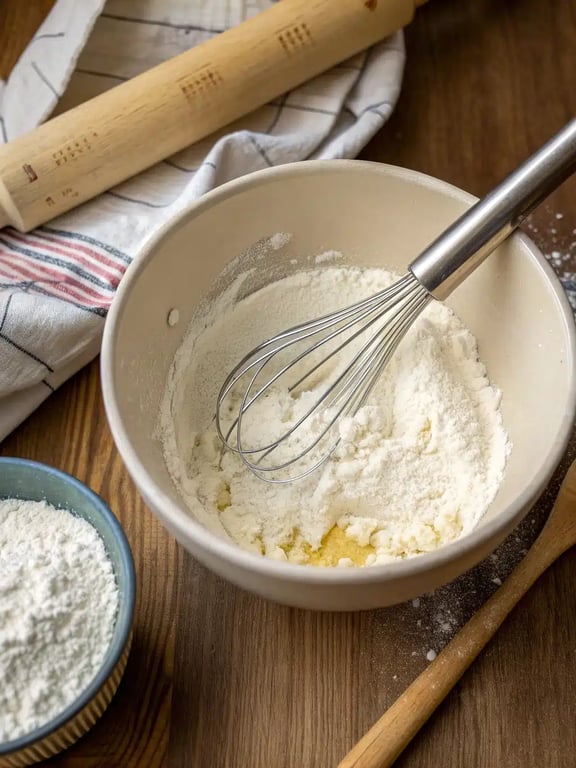
Step 3: Chill the Dough
Divide the dough in half, shape each into a disk, wrap in plastic wrap, and chill in the refrigerator for at least 1 hour, or until firm enough to roll.Step 4: Roll, Cut, and Bake
Preheat your oven to 350°F and line baking sheets with parchment paper. On a lightly floured surface, roll one dough disk out to about 1/4-inch thickness. Use a 2-inch round cookie cutter to cut out circles, re-rolling the scraps as needed.Step 5: Cool the Cookies
Place the rounds about 1 inch apart on the prepared baking sheets. Bake for 10 to 12 minutes, or until the edges are just barely beginning to turn golden. The cookies should remain pale. Let them cool on the sheets for 5 minutes before transferring to a wire rack to cool completely.Step 6: Assemble with Dulce de Leche
Once completely cool, spread a generous teaspoon of dulce de leche onto the flat side of half the cookies. Gently press a second cookie on top to create a sandwich, allowing the filling to peek out slightly around the edges.Step 7: Dust and Set
Place the powdered sugar in a fine-mesh sieve and generously dust the tops of the assembled alfajores. Let them sit for about 30 minutes so the filling sets slightly before serving.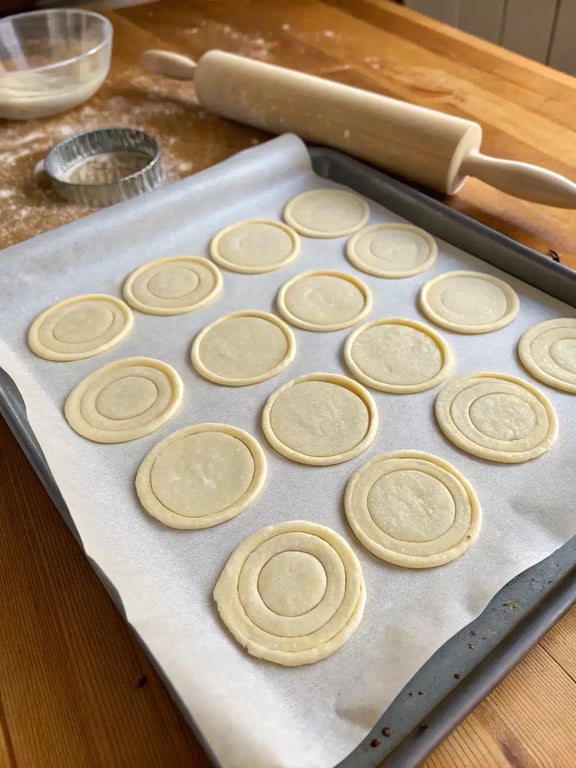
Pro Tips & Tasty Tweaks
After making countless batches, we’ve gathered a few insights that will take your Andalusian Alfajores recipe from good to absolutely perfect.- Flavor Swap: For a subtle twist, add the zest of one orange or lemon to the dough when creaming the butter and sugar.
- Timing/Heat Adjustment: Ovens vary, so start checking at 9 minutes. The cookies are done when they look dry and have the faintest hint of gold on the bottom.
- Prep/Texture Fix: If your dough feels too soft after chilling, let it sit at room temperature for just 5 minutes before rolling. Conversely, if it’s too hard and cracks, give it a few more minutes to soften slightly.
- Storage Tip: Store assembled alfajores in a single layer in an airtight container at room temperature for up to 3 days. You can also freeze the un-filled baked cookies for up to a month.
Flavor & Texture Notes
When you bite into a perfectly made alfajor from this Andalusian Alfajores recipe, you should experience a beautiful harmony. The cookie itself is tender, crumbly, and slightly sandy in texture—thanks to the cornstarch—and it should practically dissolve on your tongue. This delicate base is the perfect contrast to the rich, sweet, and deeply caramelized flavor of the dulce de leche filling. The final dusting of powdered sugar isn’t just for looks; it adds a light, sweet finish that balances the richness. As a team, we judge doneness by color: the baked cookies should be pale, with no significant browning. If they turn golden, they’ll be crisper and lose that classic melt-away quality. When assembled, the filling should hold its shape but still be soft and luscious.Variations & Substitutions
While we adore the classic version, part of the fun of homemade Alfajores is making them your own. Here are a few team-approved twists on this Spanish Alfajores template that keep the spirit alive while introducing new flavors.- Chocolate-Dipped: After assembling, dip one half of each alfajor in melted dark or milk chocolate. Let it set on parchment paper for a decadent finish.
- Citrus Zest: Add a tablespoon of finely grated lemon or orange zest to the dough for a bright, aromatic note that cuts through the sweetness beautifully.
- Spiced Dough: Whisk a teaspoon of ground cinnamon or a pinch of cardamom into the dry ingredients for a warmly spiced cookie.
- Nutty Coating: Instead of powdered sugar, roll the edges of the assembled cookies in finely chopped toasted almonds or pistachios for crunch and flavor.
- Dulce de Leche Boost: For an extra layer of flavor, stir a pinch of sea salt or a half teaspoon of vanilla extract into the dulce de leche before spreading.
Make-Ahead & Scaling
We love a recipe that respects your schedule, and this Andalusian Alfajores recipe is wonderfully flexible. You can easily break the process into stages, making it perfect for busy weeks or when you want to get a head start on a special dessert. For instance, the dough can be made, shaped into disks, wrapped tightly, and refrigerated for up to 2 days before you roll and bake. Alternatively, you can bake all the cookies, let them cool completely, and store them in an airtight container at room temperature for 2-3 days before you assemble them with the dulce de leche. When it comes to scaling, this recipe is a dream. To make a smaller batch for a cozy treat, simply halve all the ingredients. For a larger crowd, you can double the recipe without issue; just be sure to chill the dough in four disks instead of two to make rolling more manageable. If you’re baking multiple sheets at once, rotate the pans halfway through for even browning. Remember, the key to perfect homemade Alfajores is keeping the cookies pale, so keep a close eye on that first doubled batch to nail your oven’s timing.How to Serve Andalusian Alfajores
Presenting these delicate Spanish Alfajores is part of the joy. We love arranging them on a simple white platter or a rustic wooden board, where their snowy dusting of powdered sugar really stands out. For a casual coffee gathering, we often stack them in a small tower, which always feels inviting and abundant. They are rich, so one or two per person is usually perfect, making this Andalusian Alfajores recipe ideal for sharing. In our testing, we found these cookies pair beautifully with a strong cup of black coffee or a pot of mint tea, as the bitterness cuts through the sweet dulce de leche wonderfully. For a more festive presentation, consider serving them alongside a bowl of fresh berries or a small scoop of vanilla ice cream. The contrast in temperatures and textures is absolutely delightful. One of our favorite team insights is to let the assembled alfajores sit for that final 30 minutes before serving. This brief rest allows the filling to set just enough so it doesn’t squish out at the first bite, but remains gloriously soft and creamy inside. It’s a small step that makes eating them a much neater—and more elegant—experience.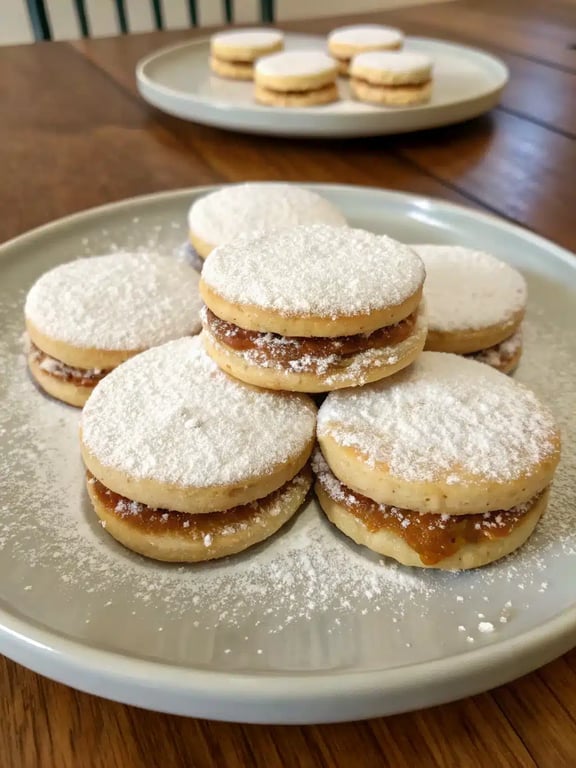
Mistakes to Avoid
Through all our testing, we’ve seen a few common hiccups that can happen with even the easiest Alfajores. By sharing them, we hope to guide you straight to a perfect batch. The good news is they’re all simple to avoid with a little know-how. First, overmixing the dough is the top culprit for tough cookies. Once you add the dry ingredients, mix just until the flour disappears and a soft dough forms. Overworking it develops the gluten, which gives you a firmer, less tender cookie that won’t have that classic melt-in-your-mouth quality. Second, rolling the dough too thin or too thick can throw off the texture and baking time. Aim for that consistent 1/4-inch thickness. If the dough is too thin, the cookies can become crisp and overbrown quickly; if too thick, the centers might remain doughy. Using guide sticks (like two wooden skewers) on either side of your rolling pin can help maintain an even thickness. Third, using dulce de leche straight from the fridge makes it difficult to spread and can cause the delicate cookies to break. Let the can sit at room temperature for about 30 minutes before you assemble, or give it a quick stir to loosen it up. This ensures a smooth, generous layer that’s easy to work with. Finally, skipping the chill time for the dough is tempting but leads to frustration. Chilled dough is far easier to roll and cut cleanly. If you try to roll soft dough, it will stick to everything and lose its shape. Trust us, that hour in the fridge is what makes these homemade Alfajores so easy to handle. Keeping these points in mind will help you sidestep the pitfalls and create a flawless batch of Spanish Alfajores every single time.How to Store Andalusian Alfajores
Proper storage is key to enjoying your alfajores at their best. After assembling, we recommend storing them in a single layer in an airtight container at room temperature. Placing a sheet of parchment paper between layers if you must stack them can help prevent sticking. Stored this way, they will stay fresh and delicious for up to 3 days. For longer storage, you have great options. The un-filled baked cookies freeze beautifully for up to a month. Let them cool completely, then pack them in a freezer-safe bag or container with parchment between layers. Thaw at room temperature before filling. You can also freeze the assembled alfajores, though the powdered sugar will melt into the filling. If you go this route, freeze them on a tray until solid, then transfer to a container. Dust with fresh powdered sugar after thawing. We don’t recommend refrigerating them, as it can dry out the cookies and cause the sugar to weep.Try This Andalusian Alfajores Recipe Yourself
We genuinely hope you feel inspired to try this Andalusian Alfajores recipe in your own kitchen. There’s something incredibly satisfying about creating such an elegant treat from simple pantry staples. Whether you’re making them for a holiday cookie exchange, a weekend project with family, or just because you deserve something sweet, this process is as enjoyable as the result. Remember, the journey to perfect homemade Alfajores is part of the fun. Don’t worry if your first cookies aren’t perfectly round—each one will be delicious. The combination of the tender, shortbread-like cookie and the rich dulce de leche is truly a match made in heaven. We’d love to hear how your batch turns out. Share them with someone you care about, pour a cup of your favorite drink, and savor every bite of your creation.Andalusian Alfajores
Delicate, melt-in-your-mouth shortbread cookies filled with rich dulce de leche and dusted with powdered sugar. This classic Spanish treat features a tender, crumbly texture and a perfect balance of sweet flavors.
Ingredients
Equipment
Method
- In a large bowl, use an electric mixer to cream the softened butter and granulated sugar together on medium speed until light and fluffy, about 3 minutes. Beat in the egg yolks and vanilla extract until fully combined.
- In a separate bowl, whisk together the flour, cornstarch, baking powder, and salt. Gradually add the dry ingredients to the butter mixture, mixing on low speed just until a soft, cohesive dough forms. Avoid overmixing.
- Divide the dough in half, shape each into a disk, wrap in plastic wrap, and chill in the refrigerator for at least 1 hour, or until firm enough to roll.
- Preheat your oven to 350°F and line baking sheets with parchment paper. On a lightly floured surface, roll one dough disk out to about 1/4-inch thickness. Use a 2-inch round cookie cutter to cut out circles, re-rolling the scraps as needed.
- Place the rounds about 1 inch apart on the prepared baking sheets. Bake for 10 to 12 minutes, or until the edges are just barely beginning to turn golden. The cookies should remain pale. Let them cool on the sheets for 5 minutes before transferring to a wire rack to cool completely.
- Once completely cool, spread a generous teaspoon of dulce de leche onto the flat side of half the cookies. Gently press a second cookie on top to create a sandwich, allowing the filling to peek out slightly around the edges.
- Place the powdered sugar in a fine-mesh sieve and generously dust the tops of the assembled alfajores. Let them sit for about 30 minutes so the filling sets slightly before serving.
Nutrition
Notes
Pro Tips: For a subtle twist, add the zest of one orange or lemon to the dough. Ovens vary, so start checking cookies at 9 minutes. If dough is too soft after chilling, let it sit at room temperature for 5 minutes before rolling. Store assembled alfajores in a single layer in an airtight container at room temperature for up to 3 days.
Tried this recipe?
Let us know how it was!Enjoyed the recipe? Share it!

Kitchen Essentials We Recommend
Tools that make cooking easier — tried, tested, and loved.


As an Amazon Associate we earn from qualifying purchases.
Got a recipe the world should try?
Share your favorite family recipe or national dish with food lovers in 100+ countries.
Submit Your RecipeFrequently Asked Questions
Can I make the dough for alfajores ahead of time?
Absolutely! This is one of our favorite make-ahead tips for this easy Alfajores recipe. You can wrap the dough disks tightly and refrigerate them for up to 2 days before rolling and baking. If the dough becomes too firm, let it sit at room temperature for 5-10 minutes to soften slightly for easier rolling.
Why are my alfajores cookies hard and not tender?
The most common reason for hard Alfajores cookies is overmixing the dough or overbaking. Mix the dough just until it comes together, and pull the cookies from the oven when they are still pale with only the faintest hint of gold on the bottom. They continue to set as they cool on the sheet.
How do I prevent the dulce de leche from squeezing out?
Letting the assembled alfajores rest for about 30 minutes before serving is the key. This allows the filling to set slightly. Also, avoid overfilling; a generous teaspoon is perfect. If your dulce de leche is very runny, you can chill it briefly to thicken it up before spreading.
Can I use something other than dulce de leche for the filling?
While dulce de leche is traditional for Spanish Alfajores, you can experiment. A thick jam, chocolate hazelnut spread, or even a thick vanilla pastry cream can work. Just ensure your alternative filling is not too wet, as it could make the delicate cookies soggy.