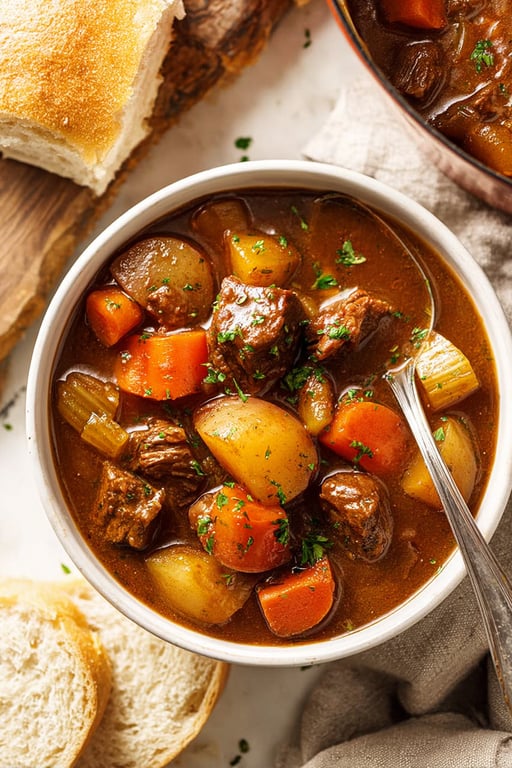
This old fashioned beef stew is one of our favorite cozy dinners, tender chunks of beef simmered with potatoes, carrots, and a rich brown gravy until everything is fork tender. For us that kind of warm, hearty comfort is exactly what real food for real life is about. It is the kind of dinner that fills the whole house with a comforting aroma as it simmers, tender chunks of beef and vegetables in a rich brown gravy that taste like home.
Beef is dusted in cornstarch, seared, then slow simmered with broth, tomato paste, garlic, and herbs along with potatoes, carrots, celery, and pearl onions. This old fashioned beef stew is the kind of slow cooked, deeply flavorful one pot meal that warms you from the inside out. Dusting the beef in cornstarch and searing it, then slow simmering it with broth, tomato paste, garlic, herbs, and hearty vegetables, builds the kind of deeply flavorful one pot meal that warms you through.

Tender beef, potatoes, and carrots in a rich brown gravy make this old fashioned beef stew a warm, hearty one pot meal.
Why You Will Love This Old Fashioned Beef Stew
- Deeply comforting. A warm, hearty bowl that is perfect for cold days.
- Tender, fall apart beef. Slow simmering turns tough beef meltingly tender.
- Rich, savory gravy. Seared beef, tomato paste, and broth build deep flavor.
- One pot meal. Beef, potatoes, and vegetables all cook together.
- Classic and satisfying. A timeless dinner the whole family loves.
What Makes This Old Fashioned Beef Stew So Good
A great old fashioned beef stew starts with searing the beef. Dusting the cubes in cornstarch and browning them builds a deep, savory crust and helps thicken the gravy later on. Dusting the beef cubes in cornstarch before searing builds a deep, savory crust and helps thicken the gravy later, so the sear does double duty for flavor and body.
Tomato paste and garlic cooked briefly in the pot add richness, while broth deglazes all the flavorful browned bits. A long, gentle simmer is what makes the beef meltingly tender. Cooking the tomato paste and garlic briefly adds richness, broth lifts all the flavorful browned bits from the pot, and a long, gentle simmer is what makes the beef meltingly tender.
The key to this old fashioned beef stew is patience. Simmering low and slow lets the beef break down and the vegetables soak up the savory gravy, and a final cornstarch slurry thickens everything to a rich finish. Simmering low and slow lets the beef break down and the vegetables soak up the savory gravy, and a final cornstarch slurry thickens everything to a rich, glossy finish.
Optional Pro Tip: Sear in Batches
Brown the beef in batches so the pieces sear rather than steam, which builds the deep, savory base of the stew. For the best old fashioned beef stew, do not rush the simmer, since the low, slow cooking is what makes the beef truly tender. Searing the beef in batches keeps the pieces from steaming, which builds the deep, savory base of the stew, and resisting the urge to rush the simmer is what makes the beef truly tender.
Tips for the Best Old Fashioned Beef Stew
Sear the cornstarch dusted beef well so the old fashioned beef stew has a rich, savory gravy, and cut the vegetables into even chunks. Searing the cornstarch dusted beef well gives the stew its rich, savory gravy, and cutting the vegetables into even chunks helps everything cook at the same pace.
Simmer low and slow until the beef is fork tender, then thicken with a cornstarch slurry. Taste and adjust the salt and pepper before serving. A low, slow simmer until the beef is fork tender is the heart of the dish, and a cornstarch slurry near the end thickens the gravy to just the right consistency.
Variations and Add Ins
- Extra veggies. Add mushrooms, parsnips, or peas.
- Herb forward. Add a bay leaf, fresh thyme, or rosemary.
- Slow cooker. Sear the beef, then transfer everything to a slow cooker for the day.
- Heartier. Serve over mashed potatoes, rice, or egg noodles.
- Tomato rich. Add a little extra tomato paste for a deeper, richer gravy.
How to Store and Make Ahead
Store leftover old fashioned beef stew in an airtight container in the refrigerator for up to four days. The flavor deepens beautifully overnight. Stored airtight, the flavor deepens beautifully overnight, which makes this an especially rewarding dish to cook a day ahead and enjoy even more the next day.
Reheat gently on the stove or in the microwave, adding a splash of broth if it has thickened. It also freezes very well for up to three months. A splash of broth stirred in while reheating loosens the gravy if it has thickened, and because it freezes so well, a batch tucked away means a cozy dinner is always close.
Serving Suggestions for Old Fashioned Beef Stew
Serve this hot in bowls with crusty bread for dipping, or spoon it over mashed potatoes, rice, or egg noodles. A sprinkle of fresh parsley adds a bright finish. Ladled into bowls with crusty bread for dipping, or spooned over mashed potatoes, rice, or egg noodles, it becomes a hearty meal, and a sprinkle of parsley adds a bright finish.
This stew uses chuck, an economical, well marbled cut that turns tender with long, slow cooking, as described in this overview of chuck steak. That cut is exactly what gives this old fashioned beef stew its rich, fall apart texture.
Frequently Asked Questions
What is the best beef for stew?
Chuck roast cut into cubes is ideal. It is well marbled and becomes tender and rich with slow cooking. Chuck roast cut into cubes is ideal, since it is well marbled and turns tender and rich with slow cooking, unlike lean cuts that can dry out.
Why dust the beef in cornstarch?
It helps the beef brown and adds body to the gravy, giving the stew a richer, thicker finish. The cornstarch helps the beef brown and adds body to the gravy, giving the finished stew a richer, thicker, more velvety texture.
How long should beef stew simmer?
About ninety minutes to two hours on low, until the beef is fork tender and the flavors have melded. A gentle simmer of around ninety minutes to two hours is what it takes for the beef to turn fork tender and the flavors to fully meld.
How do I thicken beef stew?
Sear cornstarch dusted beef and finish with a cornstarch slurry near the end, simmering until the gravy thickens. Searing cornstarch dusted beef and finishing with a cornstarch slurry near the end, then simmering until it thickens, is the reliable way to a rich, glossy gravy.
Can I make it in a slow cooker?
Yes. Sear the beef first, then transfer everything to a slow cooker on low for six to eight hours. For a slow cooker, sear the beef first to build flavor, then transfer everything to cook low and slow until the beef is fall apart tender.
What potatoes are best?
Red potatoes hold their shape well in stew. Yukon Gold also work nicely. Red potatoes hold their shape beautifully in a long simmer, while Yukon Gold turn a touch creamier, so use whichever texture you prefer.
Can I make it ahead?
Yes. It keeps for up to four days and tastes even better the next day as the flavors deepen. Because the flavor deepens overnight, it is an ideal make ahead meal, tasting even better the next day once everything has had time to meld.
Can I freeze it?
Yes. It freezes very well for up to three months. Thaw and reheat gently on the stove. It freezes very well, so cool it fully and seal it away, then thaw and reheat gently on the stove for a comforting dinner down the road.
Why is my beef tough?
It likely needs more time. Tough cuts like chuck become tender only after a long, slow simmer. Tough beef simply needs more time, since cuts like chuck become tender only after a long, slow simmer, so let it cook until it yields easily.
What should I serve with it?
Crusty bread, mashed potatoes, rice, or egg noodles all pair beautifully. Crusty bread, mashed potatoes, rice, or egg noodles all pair beautifully, soaking up that rich, savory gravy.
A Timeless Bowl of Comfort
This old fashioned beef stew delivers everything you want from a classic comfort dish, tender beef, hearty vegetables, and a rich, savory gravy in one pot. It is the definition of cozy. It delivers everything you want from a classic comfort dish, tender beef, hearty vegetables, and a rich, savory gravy in one pot, the very definition of cozy.
Make it ahead so the flavors deepen, and serve it with crusty bread or over mashed potatoes. It is a warming, crowd pleasing meal perfect for cold weather. Make it ahead so the flavors deepen, and serve it with crusty bread or over mashed potatoes for a warming, crowd pleasing meal on a cold day.
If you love warm, comforting dishes like this, you will also enjoy our slow cooker chicken stew, another favorite from our kitchen.
Results vary by ingredients, equipment, and cooking conditions. Always taste and adjust seasoning as you go.
Old Fashioned Beef Stew
Ingredients
Equipment
Method
- Dust 2 pounds beef stew meat with 2 tablespoons cornstarch and season with 1 teaspoon salt and 1/4 teaspoon black pepper.
- In a large pot or Dutch oven, heat 2 tablespoons olive oil over medium high heat. Add the seasoned beef and sear for about 5 minutes, until all sides are browned, stirring frequently.
- Stir in 2 cloves minced garlic and 2 tablespoons tomato paste. Cook for 1 to 2 minutes until fragrant.
- Pour in 4 cups beef broth and 1/4 cup chicken broth plus 1 tablespoon apple cider vinegar to deglaze the pan, scraping up any browned bits from the bottom. Add the diced potatoes, pearl onions, sliced carrots, and sliced celery. Sprinkle in 1 teaspoon granulated sugar, 1/2 teaspoon dried basil, 1/2 teaspoon dried oregano, 1/2 teaspoon dried parsley, 1/2 teaspoon paprika, and 1/4 teaspoon ground allspice. Stir to combine.
- Bring the stew to a boil over high heat, then reduce the heat to low. Cover and simmer for 90 to 120 minutes, stirring occasionally, until the beef is tender.
- In a small bowl, mix the remaining 2 tablespoons of cornstarch with 1/4 cup cold water. Stir until completely dissolved. Slowly pour the cornstarch mixture into the stew, stirring constantly. Cook on low heat for a few more minutes, until the stew thickens.
- Taste and adjust the seasoning with more salt and pepper if necessary. Serve hot.
Nutrition
Notes
Tried this recipe?
Let us know how it was!Enjoyed the recipe? Share it!

Kitchen Essentials We Recommend
Tools that make cooking easier — tried, tested, and loved.


As an Amazon Associate we earn from qualifying purchases.
Got a recipe the world should try?
Share your favorite family recipe or national dish with food lovers in 100+ countries.
Submit Your Recipe