By Isabella
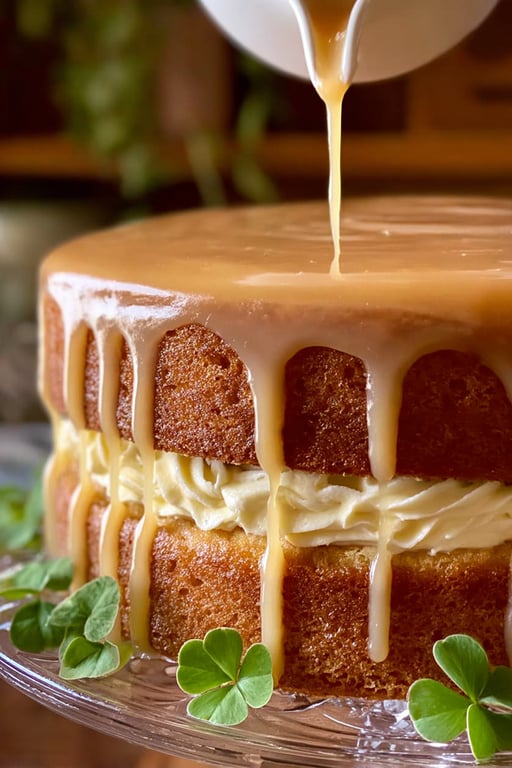
We make this Irish sponge cake whenever we want a light, festive dessert that feels special without being fussy. A sweet glaze covers the soft sponge, which is filled with a creamy buttercream and brightened with a fresh apple and lemon flavor, perfect for Saint Patricks Day or any celebration. That is real food for real life, elegant yet approachable, the kind of sponge cake that turns simple, family-friendly ingredients into a beautiful two-layer centerpiece you can decorate with a little clover and share with everyone at the table.
What makes this sponge cake so good is the lovely balance of light and rich. The tender, airy sponge is based on a classic layer cake, the buttercream filling is creamy without being too sweet, and the poured glaze adds a glossy, sweet finish with a bright fruity note. It comes together with straightforward steps, making this sponge cake an impressive but doable bake that is sure to delight at any festive gathering. Decorated with a little clover, it becomes a charming, cheerful centerpiece that everyone can enjoy.

A light sponge with creamy buttercream and a glossy, bright glaze.
Why You Will Love This Sponge Cake
- It is light. A tender, airy sponge.
- It is festive. Perfect for Saint Patricks Day.
- It is creamy. A smooth buttercream filling.
- It is bright. A fresh apple and lemon flavor.
- It is family-friendly. Made without any spirits.
- It is impressive. A beautiful two-layer centerpiece.
What Makes This Sponge Cake So Good
It starts with the sponge. A light, buttery layer, based on a classic sponge cake, gives this dessert its tender, airy crumb and gentle richness.
Then comes the buttercream. A smooth, not-too-sweet buttercream fills the center of this sponge cake, adding a creamy layer that balances the soft cake beautifully.
Next is the bright flavor. A splash of apple juice and lemon juice brings a fresh, fruity note that runs through this sponge cake, keeping it lively and family-friendly.
Finally, the glaze ties it together. A glossy poured glaze drizzles down the sides of this sponge cake, adding a sweet, shiny finish and a festive look.

Optional Pro Tip: Do Not Overmix and Use a Scale
For the lightest sponge, take care not to overmix once the flour goes in. Cream the butter and sugar until pale and fluffy, then add the beaten eggs and sifted flour in stages, mixing just until combined. Adding the apple and lemon mixture at the end on low speed keeps the batter tender. Overmixing develops the flour and can make the sponge tough, so a gentle hand at the end is the key to that classic airy crumb.
Using a kitchen scale to divide the batter evenly between the two tins is a small step that makes a big difference. Even layers bake at the same rate and stack neatly, giving you a level, professional-looking cake. Be sure to let the layers cool completely before filling, since warm cake will melt the buttercream and make assembly tricky.
Tips for the Best Sponge Cake
- Use room-temperature ingredients. For a smooth batter.
- Cream the butter and sugar well. Until light and fluffy.
- Add eggs and flour in stages. Mixing well between each.
- Do not overmix. Stir just until combined for a light crumb.
- Divide the batter evenly. Use a scale for level layers.
- Check for doneness. A tester should come out clean.
- Cool completely before filling. So the buttercream holds.
- Level the layers. Slice the tops flat for neat stacking.
- Check the glaze consistency. It should pour but not run off.

Variations and Add Ins
This festive cake is easy to make your own. Here are a few lovely ways to vary this sponge cake.
- Add a pinch of cinnamon. To deepen the flavor.
- Use orange juice. In place of apple juice.
- Add chopped pecans or walnuts. For a little crunch.
- Skip the glaze. Frost the top with extra buttercream.
- Dust with powdered sugar. For a simple finish.
- Make it as cupcakes. Bake in muffin tins and glaze each.
- Add lemon zest. To the batter for more brightness.
- Decorate with clover. For a festive Saint Patricks Day touch.
- Top with sprinkles. In green and gold for the occasion.
How to Store and Make Ahead
This sponge cake is wonderful for making ahead, which takes the pressure off on the day of a celebration. You can bake the layers a day in advance and keep them well wrapped, then fill, glaze, and decorate when you are ready to serve.
Once assembled, store the cake in an airtight container. Because of the buttercream and glaze, it is best kept in the refrigerator, where it will stay fresh for a few days. Let it sit at room temperature for a little while before serving so the sponge softens and the flavors shine.
You can also freeze any leftover cake. Wrap individual slices well and freeze them, then thaw in the refrigerator. The leftover sponge is also lovely broken up and layered into trifles.

Serving Suggestions for Sponge Cake
This sponge cake is a beautiful centerpiece for a festive table, which makes it a lovely choice for celebrations. It is perfect for Saint Patricks Day, but it shines at any spring gathering, birthday, or special occasion.
It also pairs beautifully with a warm drink. Serve a slice with a cup of strong tea or coffee, and a dollop of whipped cream on the side is a lovely touch.
- With tea or coffee. A classic, cozy pairing.
- For Saint Patricks Day. Decorated with clover.
- With whipped cream. A light, creamy addition.
- On a dessert table. As a festive centerpiece.
- With fresh berries. For color and brightness.
Frequently Asked Questions
What kind of cake is this?
This is a light, two-layer sponge cake based on a classic layer cake. It has a tender, airy crumb, a creamy buttercream filling, and a glossy poured glaze, making it an elegant yet approachable festive dessert.
How do I keep the sponge light?
Cream the butter and sugar until pale and fluffy, use room-temperature ingredients, and do not overmix once the flour is added. Mixing just until combined keeps the crumb tender and airy rather than dense.
What gives the cake its flavor?
A splash of apple juice and lemon juice runs through the cake, buttercream, and glaze, giving it a bright, fresh, fruity note. It keeps the dessert lively and family-friendly while still feeling festive and special.
Why divide the batter with a scale?
Using a scale to split the batter evenly between the two tins gives you level layers that bake at the same rate and stack neatly. It is a simple step that makes the finished cake look polished and professional.
How do I get the glaze right?
Bring the glaze ingredients to a boil and simmer briefly, then let it cool slightly before adding the apple and lemon mixture. Check the consistency before pouring, it should be thick enough to coat but still loose enough to run gently down the sides.
Can I make it without the glaze?
Yes. You can skip the glaze and frost the top with extra buttercream instead, or simply dust it with powdered sugar. Each option gives a slightly different look, so choose whichever suits your celebration.
Can I make this cake ahead?
Yes, which makes it great for entertaining. Bake the layers a day in advance and keep them well wrapped, then fill, glaze, and decorate before serving. You can also assemble the whole cake a day ahead and refrigerate it.
How should I decorate it?
For a festive Saint Patricks Day look, decorate the glazed cake with a little clover. You could also add green and gold sprinkles, a dusting of powdered sugar, or fresh berries for color, depending on the occasion.
How long does it keep?
Stored in an airtight container in the refrigerator, the cake keeps for a few days. Because of the buttercream and glaze, refrigeration is best. Let it come to room temperature before serving so the sponge is soft and the flavor shines.
What can I do with leftover cake?
Leftover sponge is wonderful broken up and layered into trifles with cream and fruit. You can also wrap and freeze individual slices, then thaw them in the refrigerator whenever you want a quick treat.
A Festive Centerpiece
Light, creamy, and finished with a glossy glaze, this Irish sponge cake is a beautiful, festive dessert that feels special yet stays wonderfully doable. The tender sponge, smooth buttercream, and bright apple and lemon flavor come together into a two-layer cake that is sure to impress at any celebration. Even better, it can be made ahead, so you can enjoy the party rather than fuss in the kitchen.
If you love Irish-inspired bakes, try another favorite like our Irish tea cake next. However you serve it, we hope this sponge cake brings a little festive sweetness to your table.
Results vary by ingredients, equipment, and cooking conditions. Always taste and adjust as you go.
Irish Sponge Cake
Ingredients
Equipment
Method
- Preheat the oven to 350 F.
- Grease the pans, line the bottoms with parchment paper, and dust the sides with flour.
- Cream the butter and sugar until very light and fluffy.
- Beat in one-third of the eggs.
- Add one-third of the flour. Repeat until all eggs and flour are incorporated.
- Mix in the remaining flour and the apple juice and lemon juice mixture until just combined.
- Divide the batter evenly between two cake pans and bake for about 35 minutes.
- Test for doneness with a cake tester or skewer.
- Cool in the pans for about 15 minutes.
- Remove from the pans and cool completely.
- Mix the buttercream ingredients until smooth.
- Level the cake layers.
- Save leftover cake scraps for trifles if desired.
- Spread or pipe buttercream over the first cake layer.
- Top with the second cake layer.
- Combine the glaze ingredients except the apple juice mixture in a saucepan.
- Bring to a boil and simmer for 2 to 3 minutes.
- Remove from the heat and stir in the apple juice and lemon juice mixture.
- Allow the glaze to cool slightly, then pour over the cake.
- Decorate if desired, then slice and serve.
Nutrition
Tried this recipe?
Let us know how it was!Enjoyed the recipe? Share it!

Kitchen Essentials We Recommend
Tools that make cooking easier — tried, tested, and loved.


As an Amazon Associate we earn from qualifying purchases.
Got a recipe the world should try?
Share your favorite family recipe or national dish with food lovers in 100+ countries.
Submit Your Recipe