By Grace
We make this overnight baguette whenever we want bakery-quality bread with a deep, developed flavor and very little hands-on effort. This homemade version simplifies the process of making a traditional baguette without sacrificing authenticity, and it leans on an overnight rest in the fridge to do most of the work. That is real food for real life, slow and rewarding yet simple, the kind of baguette that fills your kitchen with the aroma of freshly baked bread and gives you a crackly crust and a soft, chewy center worth waiting for.
What makes this baguette so good is the long, cold overnight fermentation. After a first rise, the dough rests in the refrigerator overnight, which deepens the flavor and makes the dough noticeably easier to shape. With just four simple ingredients and a little patience, the loaf delivers a beautiful golden crust and an open, tender crumb, proving that the best bread is often about time more than technique. The slow rest does the heavy lifting, so the active work on your part stays pleasantly minimal from start to finish.

A crackly golden crust and soft, chewy center from an overnight rise.
Why You Will Love This Baguette
- It has deep flavor. The overnight rest develops rich taste.
- It is easy to handle. Cold dough shapes more neatly.
- It has a crackly crust. Crisp outside, soft within.
- It uses four ingredients. Flour, salt, sugar, and yeast.
- It is mostly hands-off. Time does most of the work.
- It is versatile. Great with soup, butter, or fillings.
What Makes This Baguette So Good
It starts with the overnight fermentation. Resting the dough in the fridge overnight slowly develops a deeper, more complex flavor, the secret behind a great baguette.
Then comes the simplicity. With just flour, salt, sugar, and yeast, this baguette lets the quality of the dough and the long rise shine, with nothing extra needed.
Next is the steam. A burst of steam in the oven keeps the crust supple at first so the loaf can expand fully, giving this baguette its signature crackly, golden crust.
Finally, the scoring. A few diagonal slashes let the bread expand properly as it bakes, giving this baguette its classic look and a beautifully open crumb.

Optional Pro Tip: Embrace the Cold Ferment and Use Steam
The overnight rest in the refrigerator is the heart of this recipe, so do not rush it. Cold fermentation slows the yeast and lets the dough develop a sweeter, nuttier, more complex flavor while building structure. It also firms up the dough, which makes it far easier to shape into neat, tapered loaves. After the cold rest, let the dough come back to room temperature briefly before shaping so it relaxes and handles smoothly.
Steam is the other key to a great crust. Placing a cast iron skillet or metal pan on the bottom rack to heat up, then adding hot water right before baking, creates a burst of steam that keeps the crust soft just long enough for the loaf to expand. This gives you that crackly, blistered, golden finish. Score the loaves with confident diagonal slashes just before they go in, so they open up beautifully.
Tips for the Best Baguette
- Bloom the yeast in warm water. Until it is foamy.
- Knead until smooth and elastic. By hand or with a dough hook.
- Let the first rise double. At room temperature.
- Do the overnight cold rest. For the best flavor and texture.
- Warm the dough before shaping. So it handles easily.
- Taper the ends. For a classic baguette shape.
- Dust with cornmeal. So the loaves do not stick.
- Add steam in the oven. For a crisp, crackly crust.
- Tap for doneness. It should sound hollow underneath.

Variations and Add Ins
This simple baguette is a wonderful base to build on. Here are a few lovely ways to vary this baguette.
- Add a little whole wheat flour. For extra flavor and character.
- Make demi-baguettes. Shape smaller loaves for easy serving.
- Brush with water for shine. Before baking for a glossy crust.
- Add seeds on top. Sesame or poppy for crunch.
- Sprinkle with flaky salt. For a savory finish.
- Push the cold rest longer. Up to a full day for more depth.
- Use it for sandwiches. Split and fill with your favorites.
- Make garlic bread. Slice, butter, and toast.
- Serve as crostini. Toast thin slices for toppings.
How to Store Baguette
Like all good crusty bread, this baguette is at its very best the day it is baked, when the crust is crackly and the inside is soft. It is well worth enjoying a warm slice soon after it comes out of the oven, ideally with a little butter.
To keep it for a day or two, wrap the cooled baguette loosely and store it at room temperature. Avoid the refrigerator, which tends to dry bread out. If the crust softens, a few minutes in a warm oven will crisp it right back up.
For longer storage, freeze the cooled baguette wrapped well. Thaw it at room temperature and refresh it briefly in a warm oven, and it will taste close to freshly baked.

Serving Suggestions for Baguette
This baguette is wonderfully versatile, which makes it a lovely thing to have on hand. It is delicious torn and served warm with butter, and it shines alongside a bowl of soup or stew for dipping.
It also makes a fantastic base for so many dishes. Slice it for sandwiches, toast it for garlic bread or crostini, or serve it with cheese for a simple, satisfying spread.
- With butter. Warm and simple.
- With soup or stew. Perfect for dipping.
- As a sandwich. Split and filled.
- As garlic bread. Sliced, buttered, and toasted.
- With cheese. For an easy spread.
Frequently Asked Questions
Why ferment the dough overnight?
The overnight cold rest in the fridge slows the yeast and lets the dough develop a deeper, sweeter, more complex flavor. It also firms up the dough, making it much easier to shape into neat loaves. In short, time is flavor.
Can I skip the overnight step?
You can bake after the first rise, but the overnight cold ferment is where much of the flavor and easy handling come from. If you have the time, it is well worth it for a noticeably better loaf, both in taste and texture.
Why is steam important?
Steam keeps the crust soft for the first few minutes of baking, so the loaf can expand fully before the crust sets. Without it, the crust can harden too early and the bread will not open up, so you lose that signature crackly crust.
Why do I score the loaves?
Scoring, the diagonal slashes on top, controls how the bread expands as it bakes. Without it, the loaf can crack unevenly. The cuts let the baguette open up properly and give it that classic, beautiful look.
How do I know when it is done?
The baguette is ready when it is deep golden brown and crusty, and it should sound hollow when tapped on the bottom. If it seems pale or sounds dull, give it a few more minutes to develop that crisp, golden crust.
What kind of flour should I use?
All-purpose flour works well for this recipe and gives a lovely crumb. For a slightly chewier crust, you can use bread flour, which has a higher protein content. A little whole wheat flour can also be mixed in for extra flavor.
Why is my baguette dense?
A dense, tight crumb usually means the dough was under-fermented or under-proofed. Make sure the first rise doubles and the shaped loaves get their full second rise until puffy. The overnight rest also helps build a lighter, more open crumb.
How many loaves does this make?
This recipe makes two or three baguettes, depending on the size you prefer. You can divide the dough into smaller pieces for demi-baguettes, which are handy for serving and freeze well for later.
Can I freeze baguettes?
Yes. Once fully cooled, wrap the baguettes well and freeze them. Thaw at room temperature and refresh briefly in a warm oven to bring back the crisp crust, and they will taste close to freshly baked.
Do I need a stand mixer?
No. You can knead the dough by hand for about eight to ten minutes until it is smooth and elastic. A stand mixer with a dough hook makes it faster and easier, but it is not required for great results.
Bakery-Quality Bread at Home
Crackly, golden, and full of deep flavor from its overnight rise, this baguette proves that wonderful homemade bread is within reach. With four simple ingredients, a little steam, and the patience to let time do its work, you can pull a beautiful loaf straight from your own oven. The process is forgiving and mostly hands-off, so even a first attempt can turn out something you will be proud to slice and share.
If you love baking fresh bread, try another favorite like our Christmas bread next. However you serve it, we hope this baguette fills your kitchen with the warm aroma of homemade bread.
Results vary by ingredients, equipment, and cooking conditions. Always taste and adjust as you go.
Overnight Homemade Baguette
Ingredients
Equipment
Method
- In a large bowl, stir together the flour, salt, and sugar.
- In a separate small bowl, dissolve the yeast in the warm water and let it sit for 5 to 10 minutes until foamy.
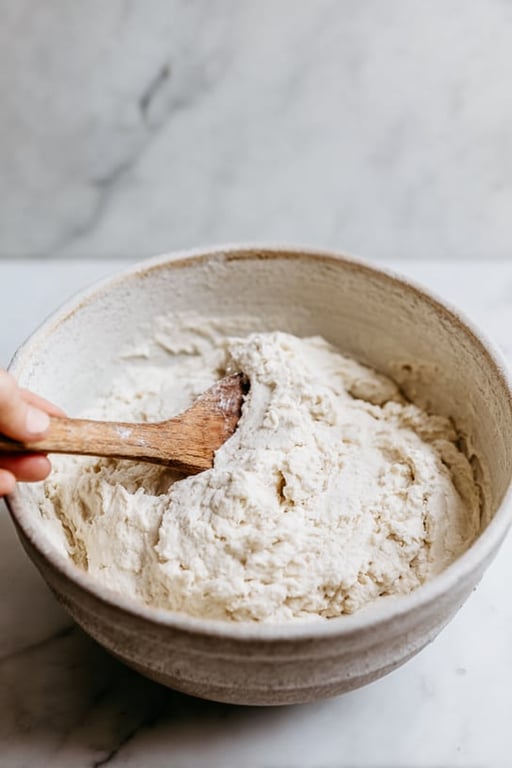
- Pour the yeast mixture into the dry ingredients and stir until a shaggy dough forms.
- Turn the dough onto a lightly floured surface and knead for about 8 to 10 minutes until smooth and elastic. Alternatively, use a stand mixer with a dough hook on medium speed for 6 to 8 minutes.
- Shape the dough into a ball, place it in a lightly greased bowl, and cover with plastic wrap. Let it rise until doubled in size, about 1 to 1 1/2 hours.
- Transfer the risen dough to the refrigerator and let it rest overnight for 8 to 12 hours.
- Remove the dough from the refrigerator and let it come to room temperature for about 30 minutes. Divide it into two or three equal pieces.
- Shape each piece into a baguette about 12 to 14 inches long, pinching the seam closed.
- Place the loaves on a parchment-lined baking sheet dusted with cornmeal or flour. Cover and let rise for 45 to 60 minutes.
- Preheat the oven to 475 F. Place a cast iron skillet or metal baking dish on the bottom rack to create steam.
- Slash each baguette with 3 to 4 diagonal cuts using a sharp knife or bread lame.
- Pour about 1 cup of hot water into the preheated skillet and quickly close the oven door.
- Bake for 20 to 25 minutes until golden brown and crusty. Cool on a wire rack before slicing.
Nutrition
Tried this recipe?
Let us know how it was!Enjoyed the recipe? Share it!

Kitchen Essentials We Recommend
Tools that make cooking easier — tried, tested, and loved.


As an Amazon Associate we earn from qualifying purchases.
Got a recipe the world should try?
Share your favorite family recipe or national dish with food lovers in 100+ countries.
Submit Your Recipe